|
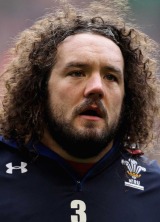
Full name Adam Rhys Jones
Born
March 8, 1981, Swansea
Current age 43 years 39 days
Major teams Barbarians, British and Irish Lions, Cardiff Blues, Harlequins, Ospreys, Welsh Probables, Wales
Position Prop
Height
6 ft 0 in
Weight 273 lb
|
| Span | Mat | Start | Sub | Pts | Tries | Conv | Pens | Drop | Won | Lost | Draw | % | |
|---|---|---|---|---|---|---|---|---|---|---|---|---|---|
| All Tests | 2003-2014 | 100 | 88 | 12 | 10 | 2 | 0 | 0 | 0 | 49 | 48 | 3 | 50.5 |
| Wales | 2003-2014 | 95 | 84 | 11 | 10 | 2 | 0 | 0 | 0 | 47 | 45 | 3 | 51.05 |
| British and Irish Lions | 2009-2013 | 5 | 4 | 1 | 0 | 0 | 0 | 0 | 0 | 2 | 3 | 0 | 40 |
| Five/Six Nations | 2004-2014 | 44 | 41 | 3 | 10 | 2 | 0 | 0 | 0 | 28 | 15 | 1 | 64.77 |
| IRB Rugby World Cup | 2003-2011 | 12 | 10 | 2 | 0 | 0 | 0 | 0 | 0 | 7 | 5 | 0 | 58.33 |
| Test debut | Wales v England at Millennium Stadium, Aug 23, 2003 match details |
| Last Test | South Africa v Wales at Durban, Jun 14, 2014 match details |
| Test Statsguru | Main menu | Career summary | Match list | Most points | Most tries | Tournament list |
| Team | Span | Mat | Start | Sub | Pts | Tries | Conv | Pens | Drop | Won | Lost | Draw | % |
|---|---|---|---|---|---|---|---|---|---|---|---|---|---|
| All matches | 2015-2017 | 16 | 11 | 5 | 0 | 0 | 0 | 0 | 0 | 11 | 5 | 0 | 68.75 |
| Harlequins | 2015-2017 | 16 | 11 | 5 | 0 | 0 | 0 | 0 | 0 | 11 | 5 | 0 | 68.75 |
Profile
Latest Articles
Adam Jones extends stay with Harlequins
(Dec 23, 2015)
Adam Jones reveals how he wept after being dropped by Wales
(Aug 22, 2015)
Adam Jones quandary key to Wales' World Cup hopes
(Mar 26, 2015)
Gatland won't beg Adam Jones to come back
(Mar 18, 2015)
Jones retirement caused shock among Wales ranks
(Jan 26, 2015)
Adam Jones news and articles (121) »
Latest Photos
Mar 9, 2014

Adam Jones looks to the crowd
© Getty Images
© Getty Images
Feb 1, 2014
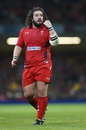
Adam Jones looks on for Wales
© Getty Images
© Getty Images
Feb 1, 2014
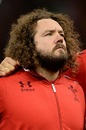
Adam Jones looks on during the national anthems
© PA Photos
© PA Photos
Feb 1, 2014
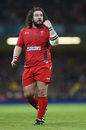
Adam Jones issues instructions
© Getty Images
© Getty Images
Live Sports
Communication error please reload the page.
-
Football
-
Cricket
-
Rugby
-
- Days
- Hrs
- Mins
- Secs
F1 - Abu Dhabi GP
Abu Dhabi Grand Prix December 11-13 1. Max Verstappen ()
2. Valtteri Bottas (Mercedes)
3. Lewis Hamilton (Mercedes)
4. Alexander Albon ()
5. Lando Norris ()
6. Carlos Sainz Jr ()
-
ESPNOtherLive >>
Snooker - China Open
Tennis - Miami Open